
Collagen is the basis of connective tissue and one of the key proteins of the human body. It accounts for about 30% of the total protein body weight, which in itself emphasises its biological importance. However, it is in the skin that the role of collagen becomes critically important. In the dermis, it forms up to 70-80% of the dry mass, determining the density of the skin, its elasticity and the ability to maintain its shape under constant mechanical stress.
When the collagen framework weakens, the skin loses its stability. It stretches faster, recovers worse, and becomes vulnerable to external influences. These procedures take time to complete. They accumulate over the years.They develop gradually and accumulate over the years, especially in areas repeatedly exposed to controlled trauma, such as during semi-permanent makeup procedures or dermoblading.
The Molecular Structure of Collagen and Extracellular Matrix

From the point of view of biochemistry, collagen belongs to fibrillar proteins. Its structure is unique and has no direct analogues among other proteins. The basic unit is a triple helix consisting of three polypeptide chains twisted into a right-handed superspiral. Such a molecule is called a tropocollagen.
One collagen molecule reaches a length of about 280 nanometres, and its molecular weight is approximately 300,000 daltons. The diameter of the fibril does not exceed 1.5 nanometres. Each chain includes about 1,000 amino acids, and their sequence is strictly ordered.
The most common ingredients are glycine, proline, hydroxyproline and hydroxylysine. They ensure the stability of the triple helix and its resistance to stretching. A violation of this structure directly affects the mechanical properties of the skin.
Collagen fibres form a spatial network of the extracellular matrix. Other connective tissue elements are attached to this network, which ensures the integrity of the dermis and its ability to evenly distribute the load.
Collagen Synthesis, Breakdown, and Remodeling
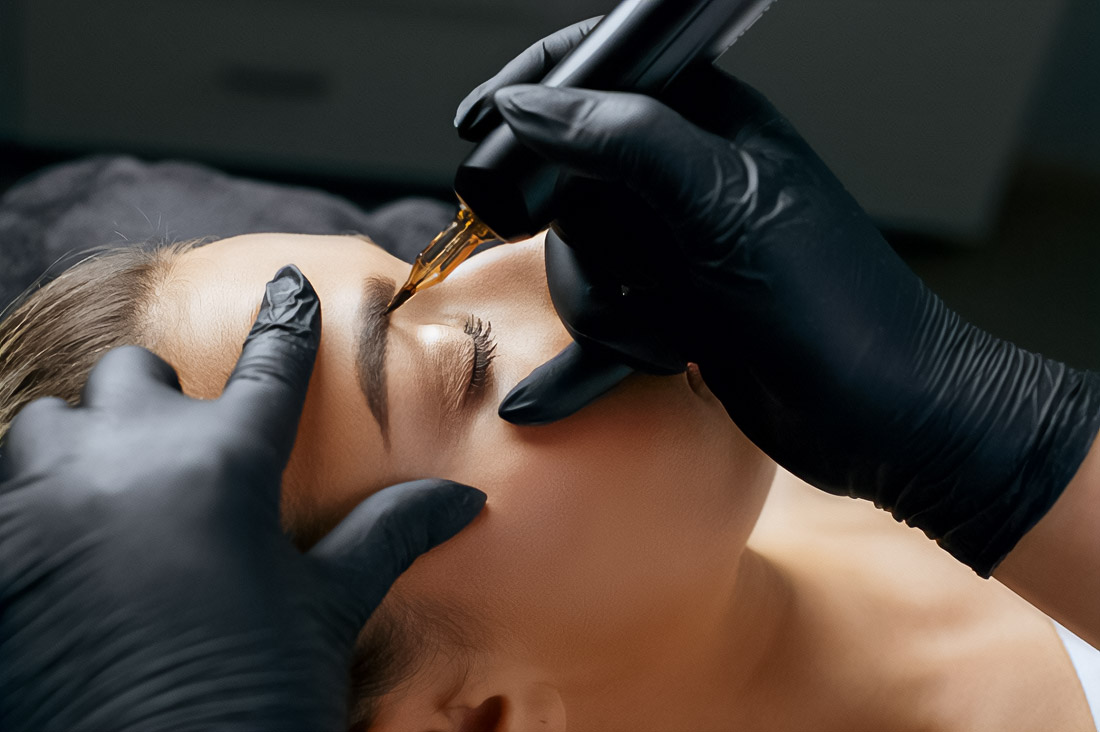
The collagen in the skin is constantly being renewed.It is a dynamic system, not a fixed structure.The main role in the synthesis is played by fibroblasts that produce procollagen.After a series of post-translational modifications, it transforms into mature collagen fibres.
The destruction mechanism works in parallel. Matrix metalloproteinases, or MMPs, are responsible for it. These enzymes break down damaged areas of collagen, freeing up space for the formation of new fibres. This process is called tissue remodelling.
Problems begin when the balance is disrupted. If degradation prevails over synthesis, the density of the dermis decreases, and the structure of the extracellular matrix becomes fragmented.
Age-Related Changes and Decreased Dermal Density
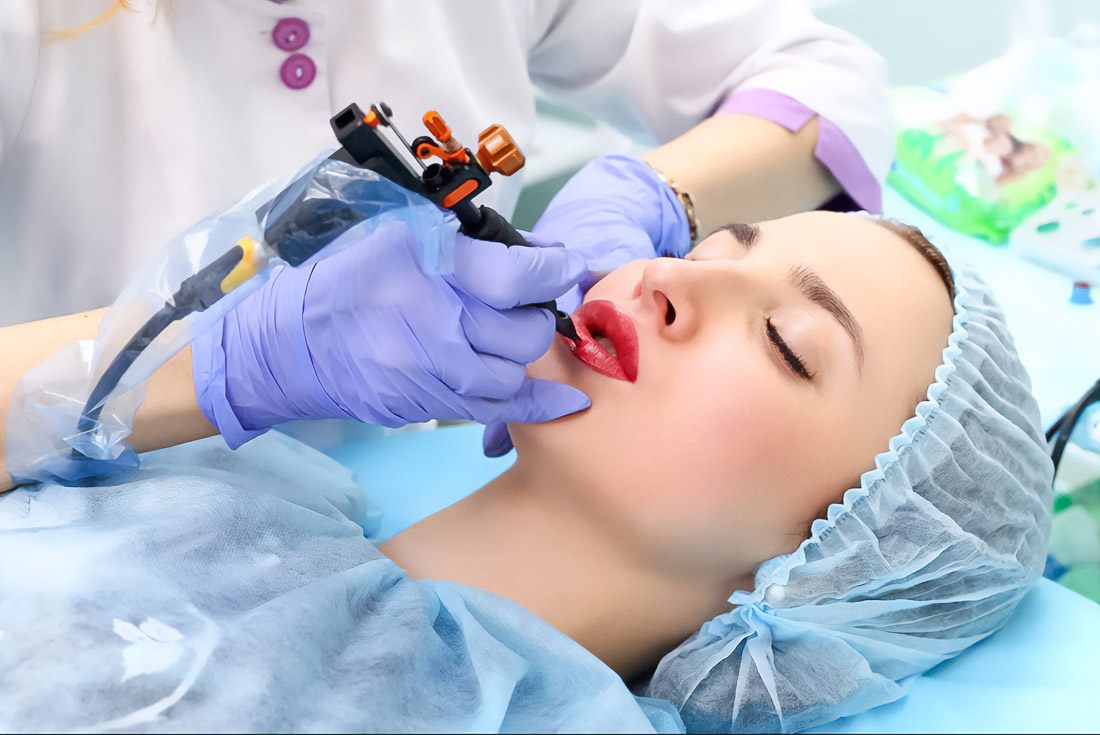
The rate of collagen biosynthesis decreases with age. The first steady changes are recorded after 25 years. After 50-60 years, endogenous synthesis slows down significantly, and in some tissues it practically stops.These factors are particularly relevant when assessing long-term skin behaviour following semi-permanent makeup or dermoblading treatments.
Not only the amount of collagen change but also its quality. The number of cross-links between the fibres increases. They become more rigid and less elastic. The dermis becomes thinner, and its ability to retain water decreases.
As a result, the skin loses its density, forms creases faster and tolerates mechanical stress worse.
Ultraviolet, Photoaging, and Glycation
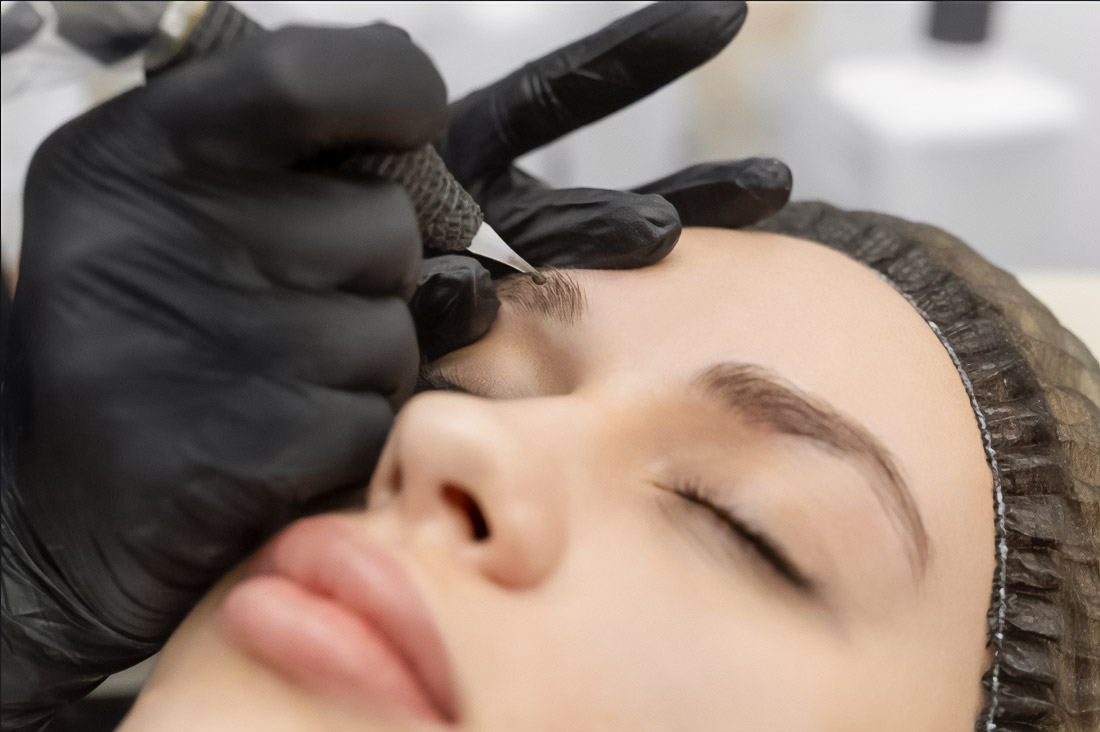
One of the most aggressive factors of collagen destruction is ultraviolet radiation. Up to 50% of UVA rays penetrate the dermis, activating metalloproteinases and accelerating fibre degradation. In some cases, the skin can lose up to 20% of collagen in a short period of intense radiation.
Photoaging is accompanied by the formation of abnormal crosslinking, increased stiffness of tissues and a decrease in their ability to repair.
Glycation deals an additional blow. This is the non-enzymatic binding of sugars to proteins, leading to the formation of AGE products. They make collagen fibres less elastic and more resistant to splitting. Since collagen has a long lifespan, it is particularly susceptible to the accumulation of such damage.
Hydration and Barrier Function of the Skin
Collagen plays an important role in maintaining the skin’s water balance. Its fibres are able to effectively bind water, ensuring optimal hydration of the dermis. This directly affects the level of transepidermal water loss (TEWL).
When the density of the collagen matrix decreases, the TEWL increases. The skin becomes drier, more sensitive and less resistant to external stimuli. The barrier function weakens, and recovery slows down.
Biological Significance of Collagen Peptides
When collagen is broken down, peptides and free amino acids are formed. They perform not only a construction function but also a signalling function. Some peptides are able to interact with fibroblast receptors, stimulating the synthesis of new collagen and extracellular matrix components.
Clinical observations showed a decrease in the depth of wrinkles by 7-20%, an increase in dermal density and an improvement in skin elasticity. There was also a decrease in nail fragility by more than 40%, reflecting a systemic effect on connective tissue.
Collagen as the Mechanical Framework of the Skin
Collagen fibres work as a shock-absorbing system. When loaded, they deform and then return to their original state. This is especially important for areas of the skin that are subject to constant movement.
The TEWL rises when the collagen matrix’s density falls. The skin resists stretching worse, loses its shape faster, and recovers more slowly after micro-damage.
Collagen is the foundation of the dermal matrix. It determines the density of the skin, its elasticity, hydration and mechanical stability. This framework is gradually destroyed by age, UV radiation, glycation, and oxidative stress, which causes the balance to change from renewal to deterioration.
We can have a better understanding of the ageing processes of the skin and the reasons behind its loss of density by comprehending the structure of collagen and the mechanisms underlying its remodelling. This information serves as the foundation for a deliberate strategy to protect the skin’s structural integrity and quality.

An experienced businessman. Traveler and philanthropist. A blogger with experience of interaction.